



How to Trace Data on a Power-On Aging Line: Scan-Code Binding and Aging Records
Time:
2026-10-30 08:28
Source:
Author:
After an aging line finishes a batch, questions like how many hours each lamp aged, whether voltage and current met spec, and whether power ever dropped mid-run should not depend on handwritten notes that fall apart the moment you look them up. How to trace data on an aging line comes down to one idea: bind a code to every product and record, bind and make queryable the whole power-on aging process.
Start by binding a code to the product. When a product comes onto the line, it is scanned once or tagged with a barcode, so each product carries a unique identity through the aging line. From then on, which stations it passed, how long it was powered at each voltage, and how long it stayed at each voltage level are all recorded against that code. With scan-code binding, no one copies numbers by hand and records never get mixed up between products.
Then record the aging process. Power-on aging runs voltage from low to normal to high and then surge, without interruption. Data traceability must capture the voltage, current and power-on duration of every stage and tie them to the product code. How long a product stayed in the high-voltage stage and whether its current fluctuated abnormally are both queryable in the system. The point is not just a single 'aging complete' mark, but leaving a trace of the whole process.
The touchscreen is the recording entry point. The touchscreen on an aging line not only sets parameters and monitors status, but also handles data recording. Every product's aging parameters, status and duration can be viewed and exported on the touchscreen. Combined with scan-code, the aging records line up one by one, so you can hand the customer a data sheet at delivery and every unit is backed by data.
Traceability also means early warning. When current runs abnormal, voltage is unstable or aging exceeds the set time, the system records and flags it in real time, so bad units are screened out on the spot instead of being discovered after the line ends. Traceability is not just an after-the-fact audit — it is in-process control that keeps problems inside the factory.
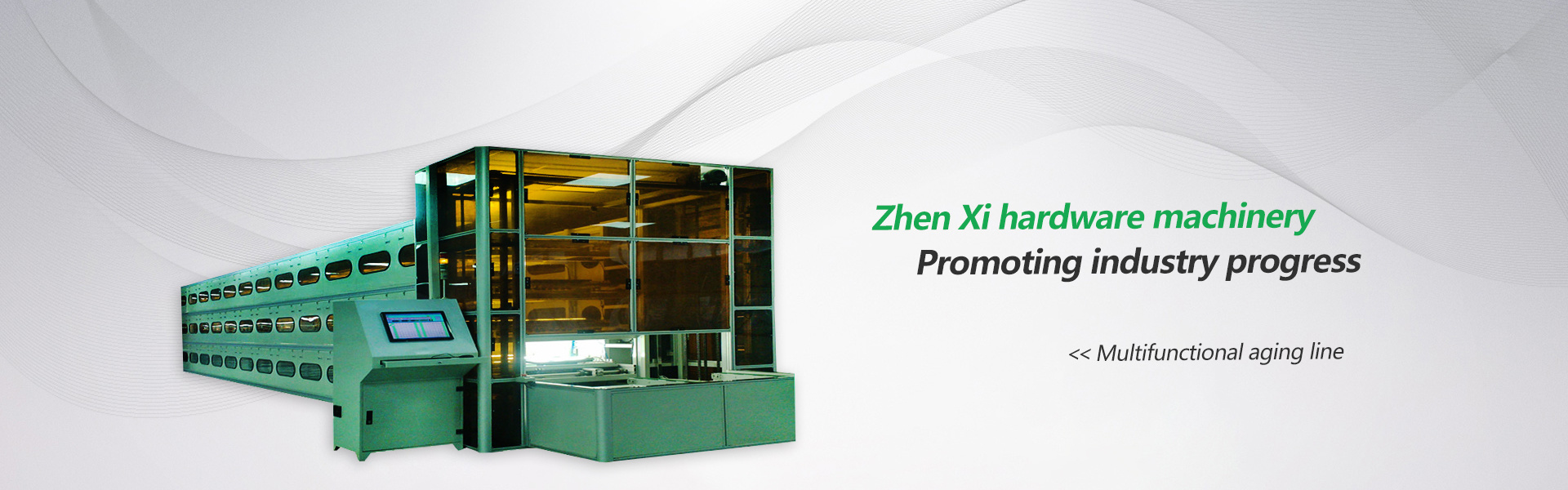
Aging data traceability is not a standard feature; it is non-standard customized to your product, aging parameters and the granularity of trace you need. Zhenxi builds aging lines with scan-code binding, process recording and touchscreen traceability, leaving a full trace of power-on aging from low to high voltage and through surge. To add aging data traceability, visit www.cnzhxi.cn or message us for details.
Previous Page
Related news

undefined
Shenzhen Zhenxi Automation Equipment Co., Ltd
Zhenxi Automation (Huizhou) Co., Ltd

Technical consultation: 13421327150 (Mr. Yang)

Service consultation: 13421327150

Shenzhen Company: No. 15, Tongfu Industrial Zone, Jiangshi Community, Gongming Street, Guangming New District, Shenzhen
Factory address: Building 19, Xinli Kangle Chuangcheng Phase III, Shuikou Street, Huicheng District, Huizhou City

Website two-dimensional code
Copyright ©2018 Shenzhen zhenxi hardware machinery co., ltd.
Powered by www.300.cn